Why AI Is Becoming Essential for Environmental Innovation
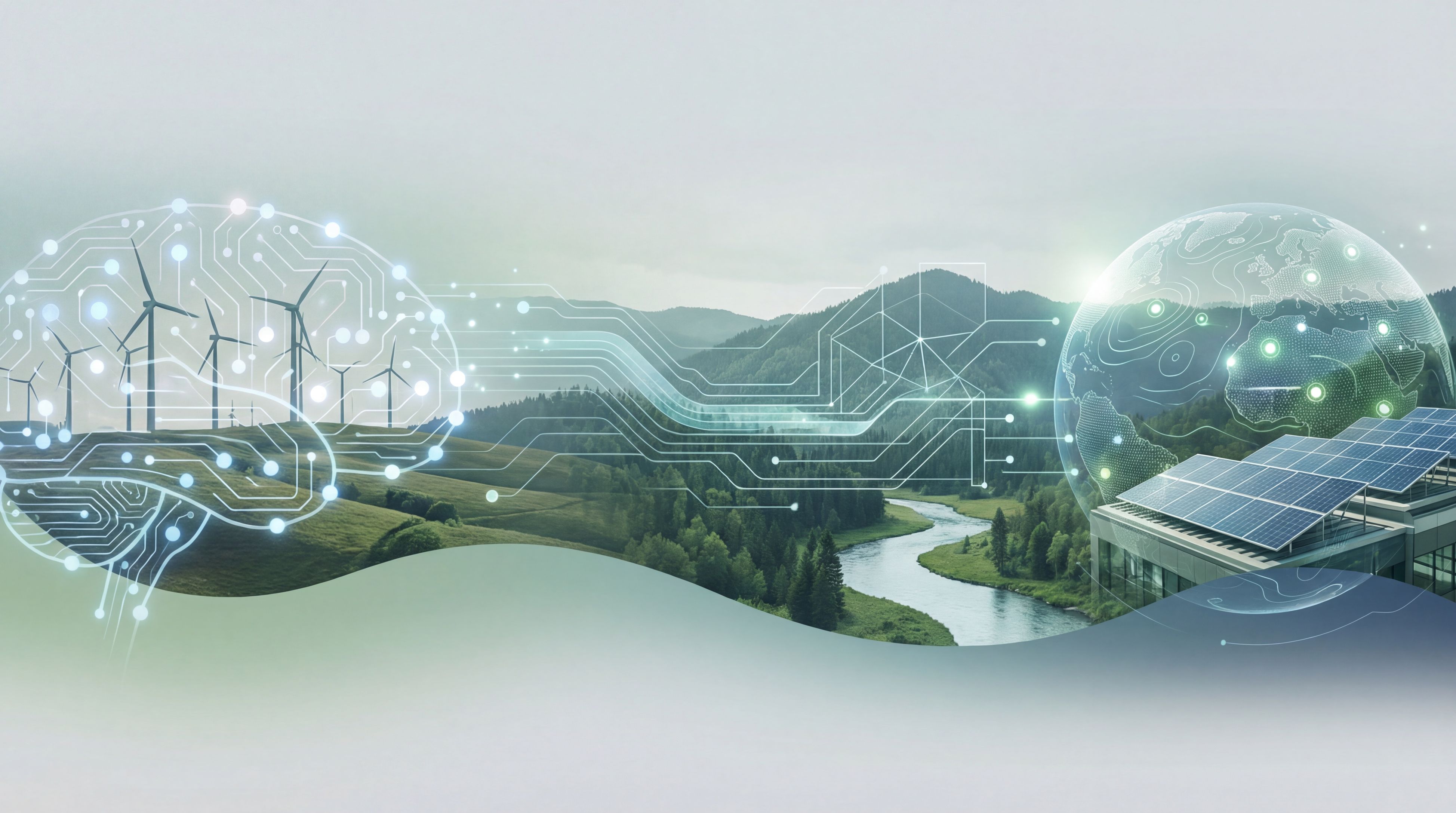
Environmental challenges are no longer abstract or distant. Climate change, resource scarcity, energy efficiency, and ecosystem degradation are problems that demand real-time insight, precision, and scale. Traditional tools and methods, while foundational, are increasingly insufficient on their own.
This is where artificial intelligence is proving to be more than a technological trend. AI is rapidly becoming a core enabler of environmental innovation, helping organizations understand complex systems, optimize decisions, and act faster than ever before.
The Complexity Problem in Environmental Systems
Environmental systems are deeply interconnected. Changes in one variable often ripple across many others, sometimes in unpredictable ways. Whether it’s climate modeling, water management, biodiversity monitoring, or energy grids, the sheer volume and complexity of data involved can overwhelm conventional analysis.
AI excels in precisely this environment.
Machine learning models can process vast datasets, identify subtle patterns, and generate insights that would be impossible to uncover manually. This allows researchers, policymakers, and companies to move beyond reactive strategies toward anticipatory and adaptive solutions.
Turning Data Into Actionable Insight
One of AI’s most important contributions to environmental innovation is its ability to transform raw data into usable intelligence.
Sensors, satellites, IoT devices, and monitoring systems now generate enormous amounts of environmental data. On its own, data has limited value. AI enables:
-
Predictive modeling of climate and environmental trends
-
Early detection of anomalies such as pollution spikes or ecosystem stress
-
Scenario testing for policy or infrastructure decisions
-
Continuous optimization rather than static planning
This shift from static reporting to dynamic, data-driven decision-making is a major leap forward for sustainability efforts.
Optimizing Energy, Resources, and Infrastructure
Energy systems are a clear example of where AI is already reshaping environmental outcomes.
AI-driven optimization is being used to:
-
Balance renewable energy supply with demand
-
Improve grid efficiency and reduce waste
-
Predict equipment failures before they occur
-
Optimize building energy usage in real time
Similar approaches are being applied to water management, agriculture, transportation, and waste reduction. In each case, AI helps organizations do more with less, a core principle of sustainable innovation.
Accelerating Research and Discovery
Environmental innovation also depends on scientific discovery. AI is increasingly used to accelerate research in areas such as:
-
Climate modeling and forecasting
-
Materials science for cleaner technologies
-
Carbon capture and storage solutions
-
Biodiversity analysis and conservation planning
By reducing the time required to analyze complex datasets or simulate outcomes, AI shortens the gap between research and real-world impact. This speed matters when environmental challenges evolve faster than traditional research cycles.
Improving Transparency and Accountability
Another critical role of AI in environmental innovation is measurement and verification.
Governments, corporations, and investors are under growing pressure to demonstrate real environmental impact. AI supports this by enabling:
-
Automated ESG data analysis
-
Continuous monitoring of environmental performance
-
Detection of inconsistencies or greenwashing
-
More accurate and timely reporting
As sustainability becomes embedded in regulation and investment decisions, AI provides the tools needed to move from aspirational goals to measurable outcomes.
The Ethical and Responsible Use of AI
While AI offers powerful capabilities, its role in environmental innovation must be guided responsibly. Transparency, explainability, and alignment with ethical standards are essential, particularly when AI informs policy or resource allocation decisions.
Responsible AI practices ensure that environmental solutions are not only effective, but also equitable and trustworthy. This balance between technological capability and governance will shape how successfully AI contributes to long-term environmental progress.
A Foundation for the Next Generation of Solutions
AI is not a replacement for environmental expertise, human judgment, or policy leadership. Instead, it acts as a force multiplier, enhancing our ability to understand systems, test solutions, and scale innovation.
As environmental challenges grow more complex and urgent, the integration of AI into sustainability efforts is no longer optional. It is becoming foundational.
Organizations that recognize this early — and build around it thoughtfully — will be better positioned to create meaningful, lasting impact.
Note: The EcoTechAI.ai domain and associated digital assets are available for acquisition.