AI for Environmental Sustainability: How Artificial Intelligence Is Reshaping the Planet’s Future
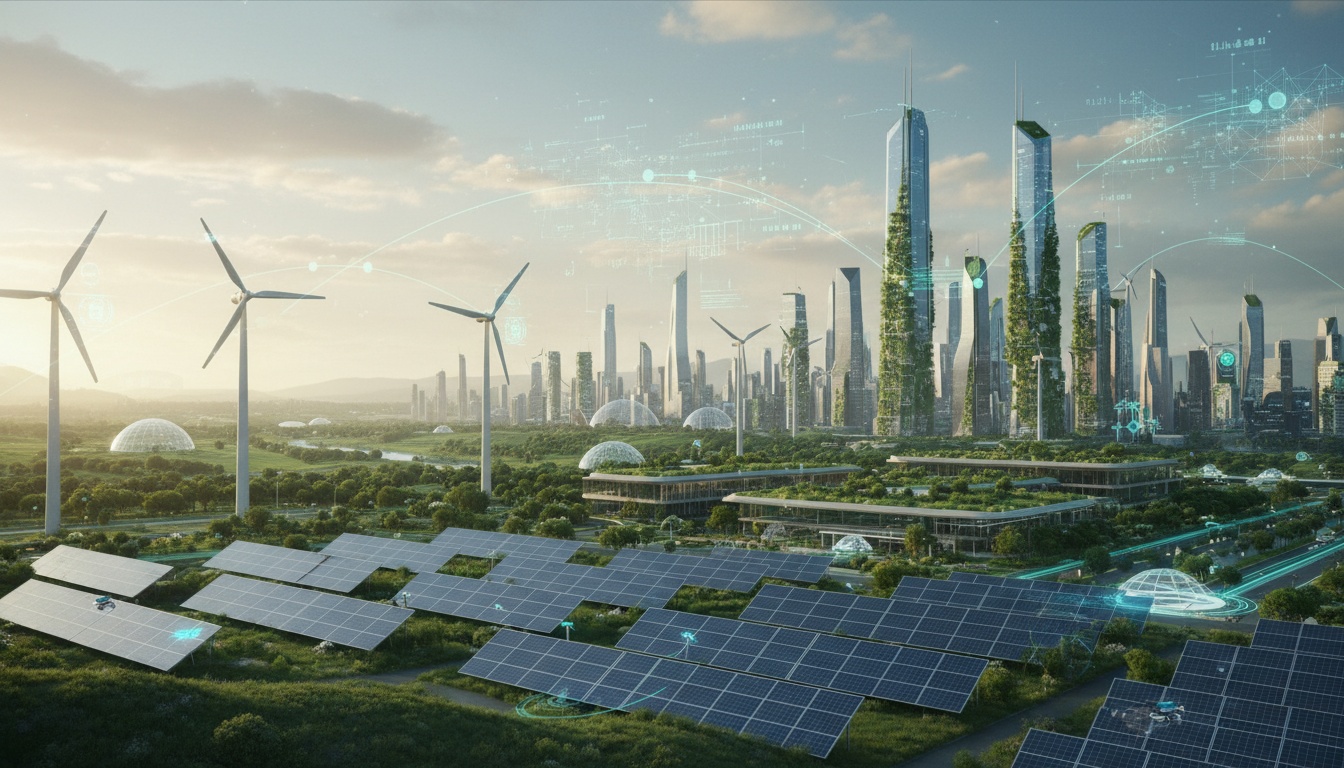
Artificial Intelligence isn’t just powering apps and automation — it’s fast becoming one of the most powerful tools for protecting the planet. From predicting extreme weather to optimizing renewable energy, AI is helping scientists and engineers tackle some of the biggest environmental challenges of our time.
Recent research published in the International Journal of Artificial Intelligence for Science explores how AI is being applied to every layer of sustainability — from monitoring ecosystems to reducing carbon emissions. Here’s what the findings reveal about the state of AI for the environment and where the technology is heading next.
1️⃣ Smarter Eyes on the Earth
AI’s ability to analyze massive datasets from satellites and sensors has revolutionized how we monitor our planet.
Deep learning models now classify land cover, detect deforestation, and even identify water pollution directly from satellite imagery. These AI systems help scientists respond faster to environmental changes and policymakers make decisions based on real-time data — a leap beyond slow, manual field methods.
2️⃣ Predicting Climate Change — and Acting on It
Machine learning has become a backbone of modern climate science. AI-driven models can simulate atmospheric behavior, forecast extreme events like hurricanes or floods, and improve the accuracy of long-term climate projections.
By combining physics-based simulations with AI’s pattern recognition, researchers can generate faster, more reliable forecasts — essential for disaster preparedness and climate policy.
3️⃣ Conservation and Biodiversity in the Age of AI
AI doesn’t just see the planet — it listens to it. Acoustic monitoring systems now use machine learning to detect endangered species in rainforests and oceans, while camera-trap algorithms identify animals automatically. These tools accelerate conservation efforts and help stop illegal poaching and deforestation before they escalate.
4️⃣ Managing Water and Energy Smarter
Water scarcity and renewable-energy reliability are long-standing sustainability hurdles.
AI is tackling both:
-
Water management: Predictive models analyze pollution data, forecast floods, and optimize irrigation.
-
Renewable energy: AI predicts solar radiation and wind speeds, stabilizing power grids and maximizing storage efficiency.
These advances make clean energy more dependable — a critical step toward carbon neutrality.
5️⃣ Challenges: Data, Trust, and Green AI
The study highlights hurdles that must be solved before AI can fully deliver on its environmental promise.
-
Data gaps: Many ecosystems still lack high-quality labeled data.
-
Model transparency: “Black-box” algorithms must become explainable to gain scientific and public trust.
-
Computational cost: Training large AI models consumes energy; the move toward “Green AI” — energy-efficient computing — is vital to ensure AI doesn’t harm what it aims to protect.
6️⃣ The Road Ahead
The future of AI in environmental science will focus on hybrid models that combine physics with machine learning, self-supervised systems that learn from raw data, and federated learning that allows collaboration without sharing sensitive datasets.
AI-driven decision systems will also play a growing role in environmental policy — helping governments simulate outcomes, test ideas, and craft smarter regulations.
Conclusion
Artificial Intelligence is reshaping the way humanity understands and protects the environment. By merging data, computation, and ecological science, AI is paving a path toward smarter resource management and a more sustainable planet.
At EcoTechAI.ai, we believe innovation and environmental stewardship can work hand in hand — because the smartest technology should serve the planet first.
Reference
This post is based on:
Kan, Y. (2025). AI for Environmental Sustainability: Advances, Challenges, and Future Directions. International Journal of Artificial Intelligence for Science, 1(1), 49-60.
Read the full paper (PDF)
✅ Related Articles
Explore more insights on how artificial intelligence is shaping environmental sustainability:
1. Sustainable AI: How Artificial Intelligence Is Shaping a Greener Planet
A deep look at how AI is improving energy efficiency, waste reduction, and climate monitoring while supporting global decarbonization goals.
2. Digital Pollution and Green Governance: Rethinking AI’s Environmental Footprint
Examines the hidden environmental costs of AI — including energy consumption, resource extraction, and the need for stronger global sustainability standards.
3. AI for a Changing Planet: Innovations Reshaping Climate and Environmental Solutions
Covers the newest AI breakthroughs transforming agriculture, disaster prediction, renewable energy, and conservation strategies worldwide.
4. How AI Is Quietly Transforming Renewable Energy Behind the Scenes
Reveals how AI forecasts energy production, stabilizes the grid, manages battery storage, and reduces maintenance costs across solar and wind systems.