AI for a Changing Planet: Innovations Reshaping Climate and Environmental Solutions
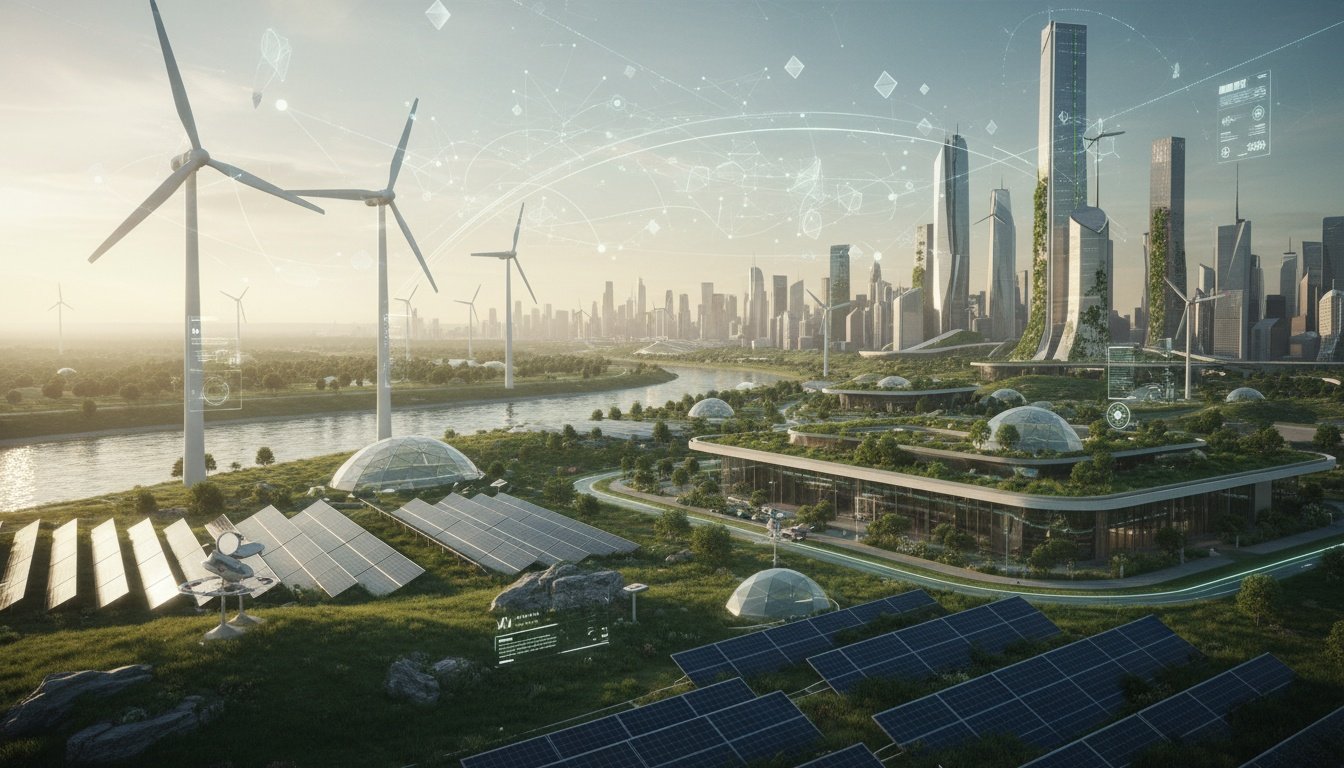
Adapted from an article by Renée Cho (2018), Columbia Climate School | Link to original at the bottom.
Introduction
Climate change continues to intensify, and its impacts are becoming more destructive every year. Rising global temperatures, extreme storms, species loss, and shifting ecosystems demand smarter, faster solutions.
One of the most promising tools emerging in this fight is artificial intelligence (AI).
AI systems can analyze enormous datasets, identify patterns far beyond human capability, make predictions, and guide decisions at a scale that wasn’t possible just a decade ago. From improving climate models to managing renewable energy and protecting wildlife, AI is reshaping how we approach environmental sustainability.
AI’s Role in Agriculture, Energy, and Climate Modeling
Boosting Crop Yields and Farming Efficiency
AI-powered systems are already transforming agriculture. In India, groundnut farmers saw 30% higher yields thanks to AI-guided recommendations on planting dates, fertilizer use, and soil preparation.
AI can combine sensors, drones, satellite imagery, and environmental data to help farmers:
-
Reduce water waste
-
Predict disease outbreaks
-
Optimize pesticide and fertilizer use
-
Determine the best times to plant and harvest
This translates to higher crop yields, lower costs, and more sustainable land use.
Integrating Renewables into the Grid
Renewable energy is essential for decarbonization, but wind and solar are naturally variable. AI helps stabilize the grid by predicting fluctuations, analyzing real-time data, and managing energy storage.
Examples include:
-
Norway’s AI-supported autonomous electric grid
-
SLAC and Stanford’s work using AI to detect grid vulnerabilities
-
Google’s machine learning system that reduced data center cooling energy by 40%
AI creates a more flexible, resilient energy system capable of supporting large-scale renewables.
Improving Climate and Weather Predictions
AI can analyze satellite imagery and meteorological data with remarkable precision.
It now achieves 89–99% accuracy in identifying:
-
Tropical cyclones
-
Atmospheric rivers
-
Weather fronts
Better forecasting saves lives, supports emergency planning, and helps cities prepare for extreme events.
AI and deep learning are also refining global climate models by:
-
Weighing accurate models more heavily
-
Incorporating complex atmospheric and ocean dynamics
-
Improving extreme event prediction
This leads to more reliable climate projections for policymakers and scientists.
AI for Conservation, Forests, and Oceans
Tracking Storm Impacts on Forest Ecosystems
Researchers at Columbia University are using AI to analyze NASA’s ultra-high-resolution images of Puerto Rico’s forests after Hurricane Maria.
The AI system learns the visual signatures of tree species and damage severity, helping researchers understand:
-
Which species survived
-
How forests recover
-
How carbon storage changes after storms
This research warns that stronger storms could mean permanent forest loss and reduced carbon absorption.
Predicting Wildlife Poaching
The PAWS project (Protection Assistant for Wildlife Security) uses machine learning to anticipate poaching hotspots by analyzing:
-
Patrol patterns
-
Crime data
-
Environmental factors
This helps rangers allocate resources and prevent illegal hunting.
Protecting Ocean Health
AI is revolutionizing ocean conservation by analyzing satellite imagery, sonar data, and climate information to monitor:
-
Illegal fishing
-
Coral bleaching
-
Marine pollution
-
Shipping lanes
-
Dead zones
-
Invasive species
The Nature Conservancy’s AI-driven ocean wealth mapping helps countries plan conservation strategies and understand the economic value of marine ecosystems.
AI for Sustainable Transportation and Urban Planning
Smarter Traffic Systems
In Pittsburgh, an AI-powered traffic system has:
-
Reduced travel time by 25%
-
Cut vehicle idling by 40%
Less idling = fewer emissions.
Urban Planning & Resilience
AI systems can simulate:
-
Building ordinances
-
Flood zones
-
Heat island effects
-
Infrastructure vulnerabilities
Cities can use this data to prepare for heat waves, redesign roadways, optimize energy use, and improve disaster planning.
AI for Water Sustainability
AI can monitor water quality in real time, detect leaks, manage distribution systems, and automate critical infrastructure like:
-
Drinking water plants
-
Irrigation networks
-
Flood management systems
This leads to safer water, reduced waste, and more resilient cities.
Conclusion
AI isn’t just a technological breakthrough — it’s becoming one of the most powerful tools we have for tackling climate change and protecting the planet. From boosting agriculture and managing renewable energy, to predicting extreme weather and safeguarding ecosystems, AI’s potential is enormous.
But to fully realize its promise, we must invest in ethical, transparent, and sustainable AI systems that amplify environmental resilience rather than harm it.
Source / Attribution
This post is adapted from:
Renée Cho (2018). “Artificial Intelligence—A Game Changer for Climate Change and the Environment.” Columbia Climate School.
Original article: https://news.climate.columbia.edu/2018/06/05/artificial-intelligence-climate-environment/
RELATED ARTICLES
AI for Environmental Sustainability: How Artificial Intelligence Is Reshaping the Planet’s Future
A broad overview of how AI is being applied across climate science, biodiversity protection, pollution tracking, and global sustainability efforts.
Sustainable AI: How Artificial Intelligence Is Shaping a Greener Planet
Breaks down how AI is cutting emissions, improving energy efficiency, and supporting greener infrastructure across multiple sectors.
Digital Pollution and Green Governance: Rethinking AI’s Environmental Footprint
Explores the hidden environmental cost of AI — from energy consumption to e-waste — and the global policies needed to govern sustainable innovation.
How AI Is Quietly Transforming Renewable Energy Behind the Scenes
A deep dive into how AI optimizes solar, wind, and energy storage systems — the perfect technological complement to climate-impact innovations.