How AI Is Quietly Transforming Renewable Energy Behind the Scenes
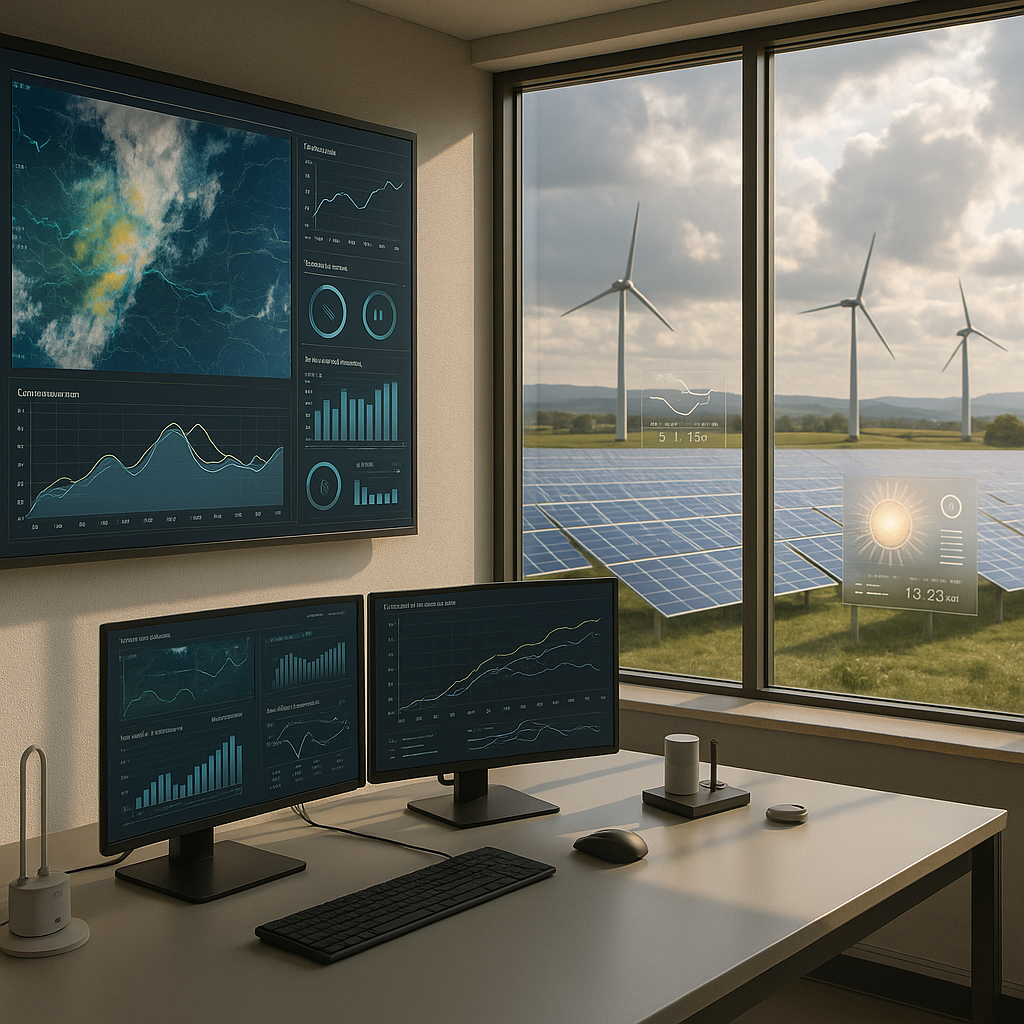
How AI Is Quietly Transforming Renewable Energy Behind the Scenes
Most people see renewable energy as solar panels, wind turbines, and EV chargers. But the real transformation? It’s happening silently in the background — powered by artificial intelligence.
While solar farms keep getting bigger and wind turbines stretch higher into the sky, it’s AI that’s optimizing the entire system. The more renewable energy we add to our grid, the more we need AI to keep everything stable, efficient, and reliable.
Here’s how artificial intelligence is reshaping renewable energy without most people ever noticing.
1. AI Predicts Energy Production With Stunning Accuracy
Solar and wind energy are naturally variable — clouds roll in, wind patterns shift, storms come and go. This unpredictability used to be a major frustration for power operators.
But AI changed everything.
Modern AI models can analyze:
-
real-time weather patterns
-
historical production data
-
satellite imagery
-
atmospheric readings
-
grid load forecasts
… and produce ultra-accurate predictions of energy output.
This allows utility companies to balance the grid hours — even days — before problems occur. The result?
✔ fewer blackouts
✔ more predictable supply
✔ higher efficiency
✔ lower costs
AI doesn’t just react to the weather — it anticipates it.
2. Smart Grids Learn and Optimize Automatically
The modern “smart grid” is basically a living system: sensors, meters, and control systems all connected through AI.
Behind the scenes, AI constantly monitors:
-
demand spikes
-
renewable generation levels
-
battery storage capacity
-
grid congestion
-
power routing efficiency
Then it automatically adjusts the grid in real time to keep everything stable.
Think of it like air traffic control — but for electrons.
This AI-driven grid can make decisions every millisecond, far faster than any human-based system could.
3. AI Reduces Waste by Managing Energy Storage Smarter
Battery storage is essential for renewable energy, but storing and releasing power at the wrong time can waste energy or reduce battery life.
AI fixes this by:
-
predicting peak demand
-
timing charge/discharge cycles
-
reducing battery degradation
-
redirecting excess power to storage before it’s wasted
-
releasing stored power at the most efficient times
This makes renewable energy far more consistent and dependable.
Some smart grids now run entire neighborhoods on optimized AI-managed storage for hours at a time.
4. AI Uses Drones and Robotics to Maintain Solar & Wind Farms
Maintenance used to be slow, expensive, and dangerous. Now?
AI-powered drones and robots handle most of it.
They can:
-
scan solar panels for micro-cracks
-
detect dust or shading issues
-
identify malfunctioning turbines
-
spot damaged blades
-
catch heat anomalies with thermal cameras
-
perform routine structural inspections
This not only saves money — it prevents failures before they happen.
Some wind farms have reduced maintenance costs by up to 40% thanks to predictive AI inspections.
5. AI Helps Integrate Millions of Distributed Energy Sources
We’re entering a world where power doesn’t come from a few big plants.
Instead, it comes from millions of small producers, like:
-
rooftop solar arrays
-
home batteries
-
EV chargers
-
microgrids
-
community solar farms
AI coordinates all of these small energy producers so they work together instead of overwhelming the grid.
It’s like turning millions of puzzle pieces into a perfect, unified energy system.
6. AI Creates More Sustainable Cities Without Most People Knowing
Cities worldwide are quietly adopting AI-driven systems to improve sustainability.
AI now helps manage:
-
traffic flow to reduce emissions
-
public transit efficiency
-
building heating/cooling optimization
-
real-time pollution monitoring
-
water and waste systems
Many of these systems run 24/7 without residents ever noticing — yet they reduce energy use by thousands of megawatt-hours each year.
7. AI Makes Renewable Energy Cheaper for Everyone
Here’s the big one:
Every optimization AI provides — forecasting, maintenance, grid balancing, storage management — all reduces cost.
The result?
✔ cheaper electricity
✔ more reliable clean power
✔ faster growth of renewable energy
In many areas, solar and wind power are already the cheapest energy sources in history. AI is accelerating that trend every year.
The Future: AI + Clean Energy = A Smarter Planet
We often imagine the future of renewable energy as massive solar farms or towering wind turbines.
But the truth is simpler:
The future of clean energy is intelligence.
The more AI we add to the system, the more efficient, reliable, and sustainable it becomes.
AI isn’t replacing renewable technology — it’s empowering it.
We’re entering an era where clean energy and artificial intelligence work hand-in-hand to power a greener world.
And this is only the beginning.
RELATED ARTICLES
AI for Environmental Sustainability: How Artificial Intelligence Is Reshaping the Planet’s Future
A broad look at AI’s role in climate modeling, ecosystem protection, and global environmental strategy — ideal context for understanding energy-focused AI systems.
AI for a Changing Planet: Innovations Reshaping Climate and Environmental Solutions
Examines the newest breakthroughs in AI for agriculture, disaster response, renewable energy, and biodiversity.
How AI Is Reducing Energy Waste in Smart Cities
A close complement to your renewable energy post — showing how AI-driven systems optimize urban energy use, reduce emissions, and improve city-wide sustainability.