How AI Is Transforming Environmental Science: Smarter Data for a Changing Planet
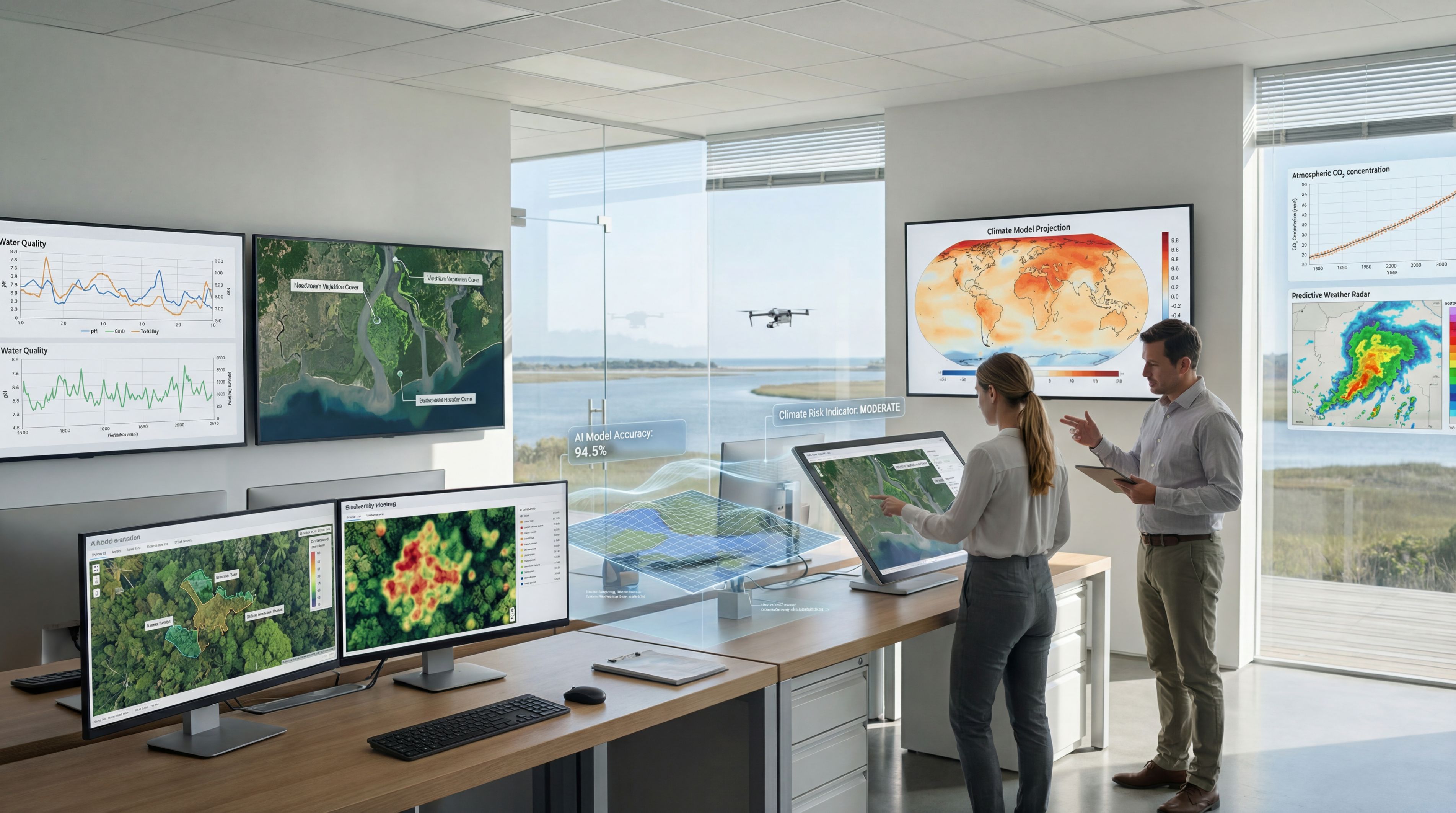
Climate change is accelerating, ecosystems are shifting, and natural resources are under pressure like never before. For decades, environmental scientists have used fieldwork, satellite images, lab studies, and statistical models to understand what’s happening to our planet. But today, something new is reshaping the entire field — artificial intelligence.
AI isn’t replacing scientists.
But it is giving them the ability to see patterns we’ve never seen before, analyze massive datasets in minutes, and make predictions with far greater accuracy.
Environmental science is stepping into the “smart” era — and AI is becoming one of the most powerful tools in the fight for a sustainable future.
In this article, we’ll explore how AI is helping researchers understand our changing planet, protect ecosystems, respond to disasters, and build more resilient communities. And we’ll do it in a way that’s approachable, conversational, and grounded in real-world examples — not technical jargon.
Why Environmental Science Needs AI More Than Ever
Climate, ecosystems, and weather patterns are incredibly complex. A single day of data from Earth’s climate system can include:
-
billions of atmospheric measurements
-
satellite scans of oceans and forests
-
ocean temperature readings
-
wildlife tracking signals
-
soil moisture data
-
pollution levels across thousands of cities
-
wind, rain, and storm developments
A human can’t analyze all of that — there’s simply too much.
AI, however, thrives on enormous datasets. It can sift through millions of data points, detect hidden patterns, and predict environmental changes faster and more accurately than traditional methods.
And that’s exactly what scientists need right now.
AI Is Improving Weather and Climate
Predictions
If you’ve noticed weather forecasts getting more accurate in recent years, AI has a lot to do with it.
Traditional weather models rely on physics-based simulations that require huge supercomputers. AI adds another layer — the ability to recognize patterns humans may miss.
🌩️ Better Forecasting for Extreme Weather
AI now helps identify:
-
developing hurricanes
-
atmospheric rivers
-
severe thunderstorms
-
flood risks
-
heat waves
Models like Google’s GraphCast and NVIDIA’s FourCastNet have shown faster and more accurate forecasting than traditional methods in many scenarios.
For example:
-
AI models predict cyclone paths more precisely
-
AI can simulate climate trends decades into the future
-
AI helps emergency planners prepare for storms before they form
In some cases, AI-powered storm prediction tools can forecast severe weather up to several hours earlier than older systems — a difference that can save lives.
AI Is Mapping Forest Health and Ecosystem Changes
Forests store enormous amounts of carbon, support biodiversity, and regulate global climate — but they’re under increasing threat from storms, fires, and deforestation.
Environmental scientists are now using AI to analyze ultra-high-resolution satellite and drone images to track:
-
tree species
-
forest density
-
storm damage
-
regrowth rates
-
illegal logging
-
changes in carbon storage
📌 Real Example: Hurricane Maria & Forest Recovery
Researchers at Columbia University trained an AI system to analyze satellite images of Puerto Rico’s forests before and after Hurricane Maria.
The AI could:
-
identify which species survived
-
measure canopy loss
-
predict long-term ecosystem recovery
This kind of work used to take entire research teams months — now AI can accelerate the process dramatically.
AI Is Protecting Wildlife in Real Time
Wildlife protection is one of the most surprising areas where AI is making a difference.
🦁 AI Against Poaching
The PAWS project (Protection Assistant for Wildlife Security) uses machine learning to analyze:
-
ranger patrol routes
-
poaching incidents
-
terrain
-
migratory patterns
Based on this data, it predicts where poachers are likely to strike next — allowing rangers to intervene.
It has already helped reduce illegal hunting in several protected areas.
🎧 AI That “Listens” to Forests
In places like the Amazon, AI tools analyze audio recordings and can detect:
-
chainsaws
-
gunshots
-
species calls
-
biodiversity changes
This helps scientists monitor remote ecosystems without having to physically be there.
🐬 AI for Oceans
Marine scientists use AI to track:
-
coral bleaching
-
illegal fishing
-
ocean pollution
-
whale migration
-
temperature-driven ecosystem shifts
Environmental monitoring is no longer limited by human bandwidth — AI expands what scientists can see, hear, and understand.
AI Is Making Wildfire Prediction More Accurate
Wildfires are growing more destructive as temperatures rise and weather patterns change. AI tools now help:
-
identify fire-prone regions
-
predict fire spread based on wind and terrain
-
give warning before fires form
-
optimize evacuation routes
For example, AI models in California analyze satellite data, wind patterns, moisture levels, and historical fire behavior to predict wildfire ignition hours — sometimes days — before visible signs appear.
This provides firefighters and communities valuable time to prepare.
AI Is Improving Water Quality and Reducing Waste
Water sustainability is becoming a global challenge. AI now assists in:
-
leak detection
-
real-time water quality monitoring
-
predicting contamination events
-
optimizing irrigation for farmers
-
managing reservoir systems
-
reducing treatment plant energy consumption
Cities like Singapore and Amsterdam have already integrated AI into their water systems to reduce waste and ensure clean supply.
Even small improvements can lead to major water savings when applied at city scale.
AI Accelerates Lab Work and Environmental Research
Behind every environmental breakthrough is a ton of lab work — testing soil composition, analyzing ice cores, studying chemical pollutants, measuring atmospheric gases, and more.
AI now helps:
-
analyze chemical datasets
-
speed up image-based lab work
-
classify samples
-
automate repetitive tasks
-
identify patterns humans overlook
-
model chemical reactions faster
This doesn’t replace scientists — it gives them more time to focus on interpretation, innovation, and problem-solving.
AI Is Making Cities More Sustainable
Cities are the front lines of climate change — and AI is helping reduce pollution and energy waste.
Examples include:
🚦 Smarter Traffic
In Pittsburgh, AI-powered traffic systems reduced:
-
travel time by 25%
-
vehicle idling by 40%
Less idling = fewer emissions.
🏙️ Better Energy Use
AI manages building heating/cooling, reducing unnecessary energy use.
🌡️ Heatwave Protection
Some cities use AI to map heat islands and design cooler urban layouts.
AI isn’t just helping scientists — it’s helping city planners build healthier, more resilient communities.
The Big Picture: Environmental Science Is Getting Smarter
AI isn’t a magical cure for climate change.
But it is a powerful tool helping scientists understand, predict, and respond to environmental challenges more effectively.
It allows us to:
-
See patterns hidden in huge datasets
-
Predict storms and fires sooner
-
Protect endangered species
-
Reduce water and energy waste
-
Understand fragile ecosystems
-
Respond faster to climate emergencies
-
Improve the accuracy of long-term climate models
Environmental science is becoming more proactive and precise — and AI is at the center of that shift.
The future of environmental science isn’t just greener.
It’s smarter.
Related Articles
• Sustainable AI: How Artificial Intelligence Is Shaping a Greener Planet
Discover how AI is transforming renewable energy, agriculture, and environmental monitoring through smarter, more efficient technologies.
👉 Read more: https://ecotechai.ai/blog/sustainable-ai-how-artificial-inte...
• Digital Pollution and Green Governance: Rethinking AI's Environmental Footprint
A deep dive into the hidden environmental costs of AI — from energy-hungry data centers to global supply chain challenges.
👉 Read more: https://ecotechai.ai/blog/digital-pollution-and-green-govern...
• How AI Is Quietly Transforming Renewable Energy Behind the Scenes
Explore how AI improves grid reliability, predicts energy output, and reduces waste in solar, wind, and smart-grid systems.
👉 Read more:https://ecotechai.ai/blog/how-ai-is-quietly-transforming-ren...
• AI for a Changing Planet: Innovations Reshaping Climate and Environmental Solutions
From advanced climate models to conservation tech, learn how AI is helping scientists protect ecosystems and prepare for extreme weather.
👉 Read more:https://ecotechai.ai/blog/artificial-intelligence-a-game-cha...
• How AI Is Reducing Energy Waste in Smart Cities
Take a look at how cities are using AI to optimize traffic, reduce pollution, and build cleaner, more efficient urban environments.
👉 Read more: https://ecotechai.ai/blog/how-ai-is-reducing-energy-waste-in...